Be Honest.
See clearly. Question assumptions, listen carefully and stay willing to change your mind.

I’m a Swedish venture partner based in Kansai, Japan. Combining investment and company-building experience with active roles in Japan’s innovation ecosystem, I help founders, researchers, investors and companies assess opportunities, strengthen ventures and build partnerships across Europe and Asia.

My experience spans investment evaluation and structuring, hands-on company development and operational leadership. As COO of Katalysen Ventures, I led its IPO and worked across a portfolio of more than 20 ventures, supporting management teams, commercial priorities and investor communication. I also developed a framework for collaborative investments, bringing capital and expertise together around venture opportunities. This work taught me to connect investment decisions with the practical realities of building a business—and to consider what a team needs to move forward.
I grew up in Sweden and studied Global Business at HKUST in Hong Kong and Tsinghua University in Beijing, and Chinese at National Sun Yat-sen University in Taiwan. After graduating, I worked in technology and finance consulting in Dublin and Hong Kong, then in venture capital in Geneva and Stockholm, before moving to Japan. Living and working across these cultures has shaped how I listen, build trust and approach collaboration. Today, I use that experience to help people across Japan, Europe and Asia develop opportunities together.
See clearly. Question assumptions, listen carefully and stay willing to change your mind.
Appreciate the people and opportunities already here. Meet uncertainty with grounded optimism.
Share time, knowledge and effort. Take responsibility and help others move forward.
Experience builds confidence. Confidence encourages action. Action creates new experience—and the cycle continues. I want to help researchers and innovators enter this positive cycle, globally and especially in Japan, by creating opportunities to try, learn and move forward.
My work connects experience, people and opportunities across Sweden, Europe and Japan—with the aim of helping more ideas move into action.
More experience. More confidence. More action.

Three ongoing roles, bringing together company building, founder support and international collaboration.
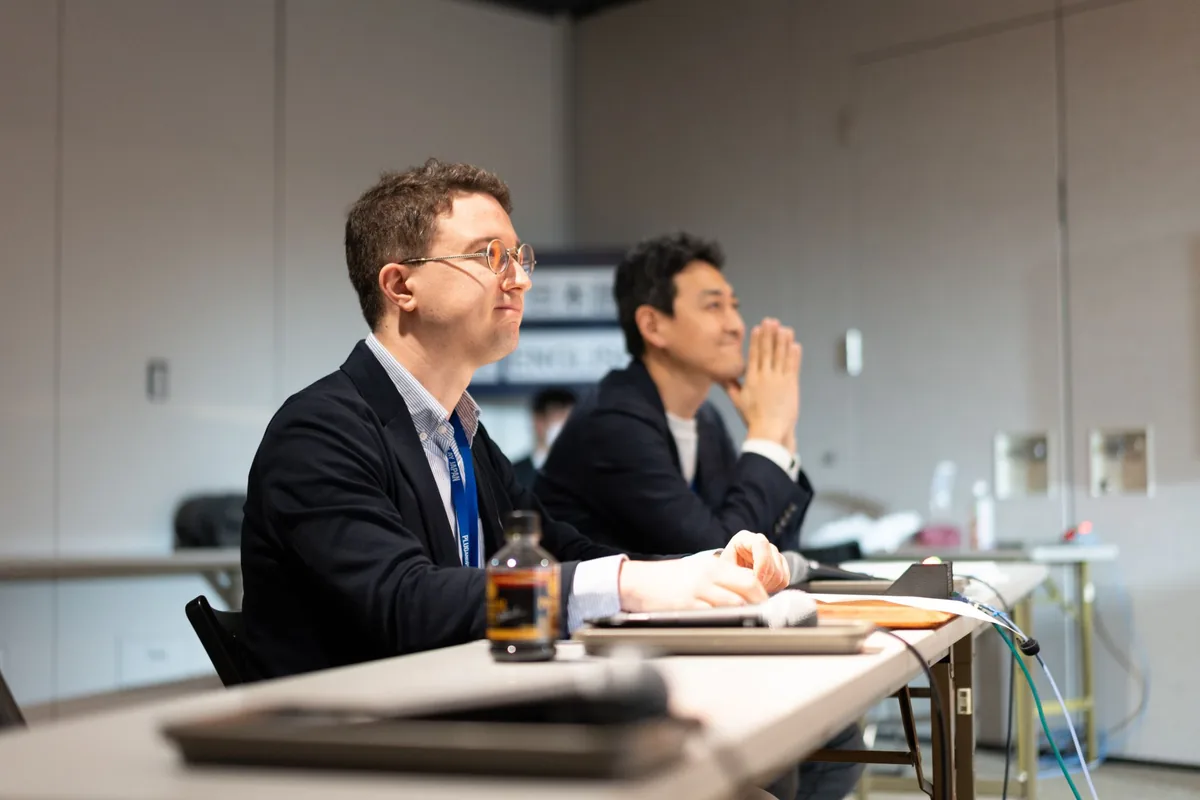 Venture Partner · Former COO
Supporting venture development, investment opportunities and founder strategy. My experience includes leading Katalysen’s IPO, overseeing portfolio operations and investor communication, and developing a framework for collaborative investments.
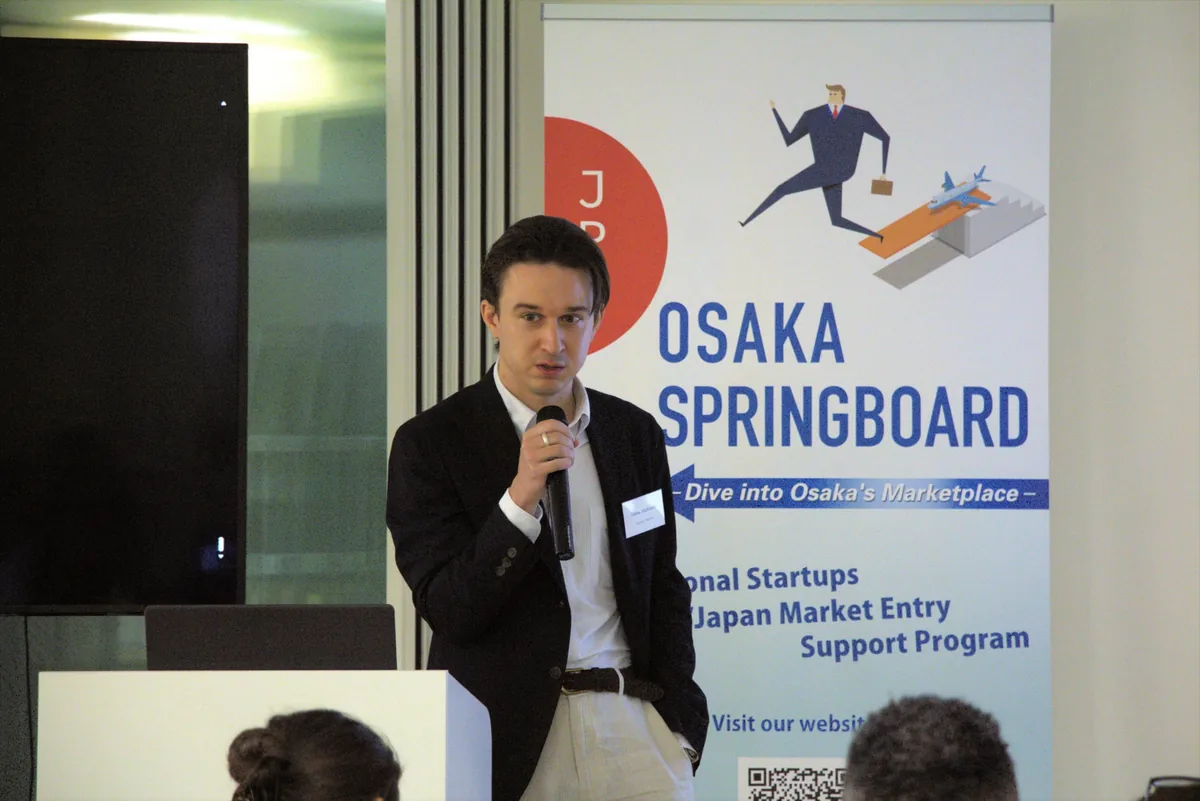 Global Advisor
Supporting Kansai’s research and innovation ecosystem through Osaka Innovation Hub, with a focus on KSAC. I bring an investor perspective to researchers and university startups as they explore commercial opportunities and collaboration.
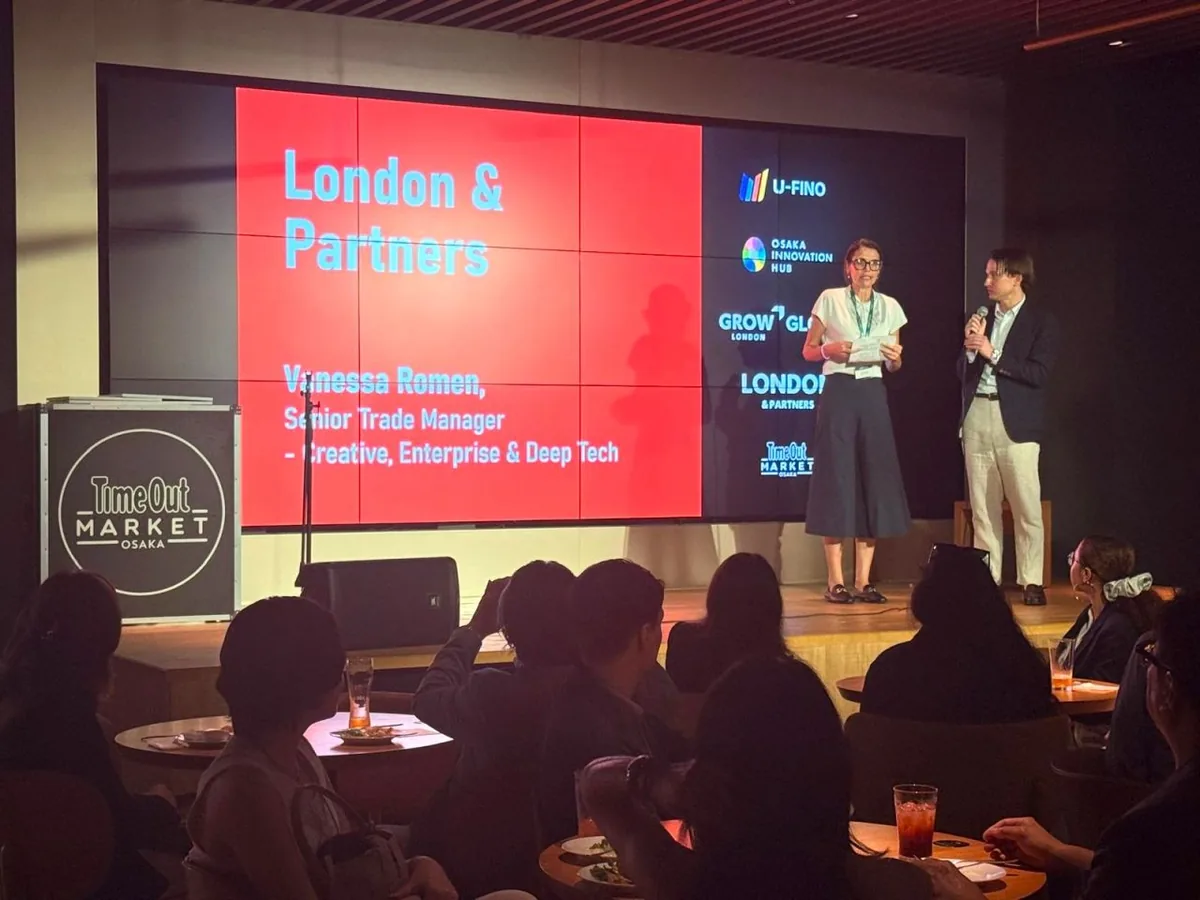 Global Coordinator
Connecting international innovation communities with Osaka and Kansai. I support exchanges, share perspectives on investment and collaboration, and help build relationships between companies, startups and institutions—including through Kansai Europe Night.
A specialist biotech company with valuable technology faced bankruptcy. A consortium brought together capital, sector expertise and a new ownership structure to give the business a fresh start.
In 2023, Katalysen’s Venture Targeter joined a consortium led by Quatre Lab to acquire Vironova BioAnalytics from its bankruptcy estate. The business, subsequently renamed QuTEM, specialized in transmission electron microscopy and analysis for biopharmaceutical applications.
The public case study describes Venture Targeter’s contribution to securing essential IP, retaining key people, arranging financing and negotiating with the bankruptcy administrator. These elements helped preserve the foundations of the business and establish a viable plan for its revival.
My contribution included helping structure Katalysen’s position in the investment. The acquisition was a collective effort by the consortium. For me, it illustrates how investment judgment, ownership design and practical venture development can work together to preserve and develop valuable technology.

One practical example of how I work: connect the team’s experience to the problem, business and next funding milestone.
What relevant work have you done?
Start with relevant work, research or first-hand encounters with the problem. Choose a few concrete examples that explain why this team understands the field. The aim is to establish the foundation for your expertise, rather than list every credential.
Each claim should be supported by the team’s actual experience and evidence.These are some examples of places where I have shared perspectives, supported founders and helped people connect.
Stories worth reading from entrepreneurs in my network.
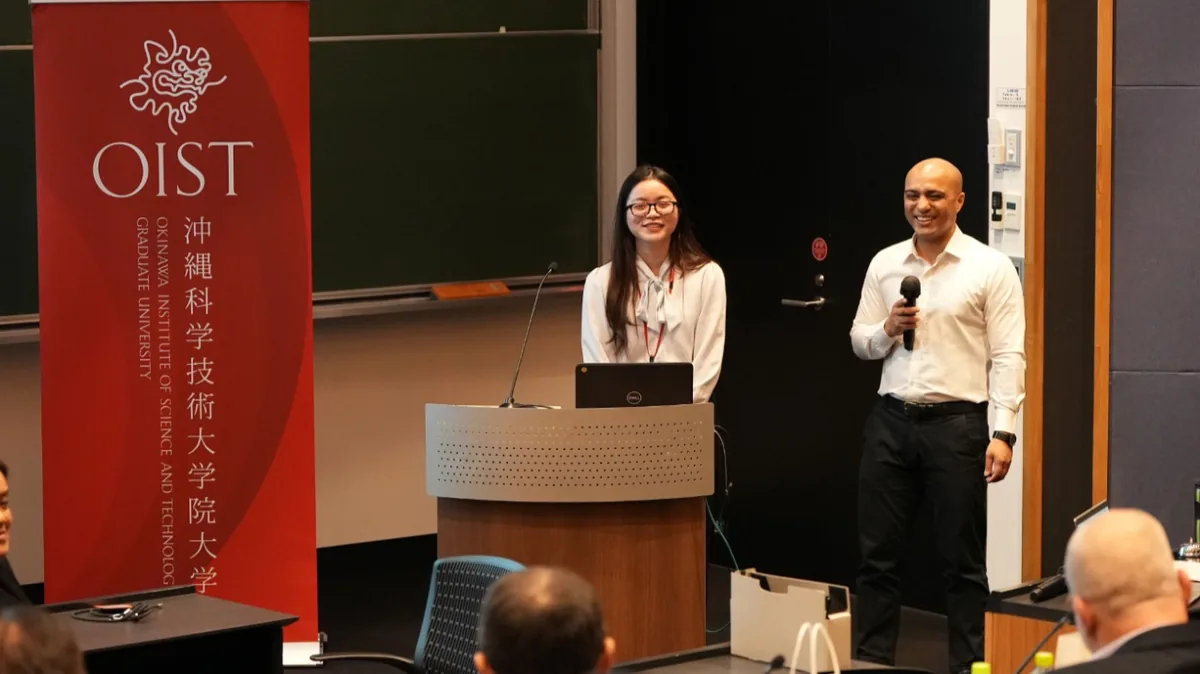
Making research knowledge more accessible
My conversation with Manas explored how firsthand experience of research bottlenecks led to Veritus AI. His work focused on helping researchers discover literature and navigate review processes.
What interested me was the relationship between the person and the problem: a team drawing on its own experience, and treating AI as a way to amplify human expertise. The interview also revealed a willingness among Japanese research institutions to experiment with new tools.
Read the full interview on LinkedIn ↗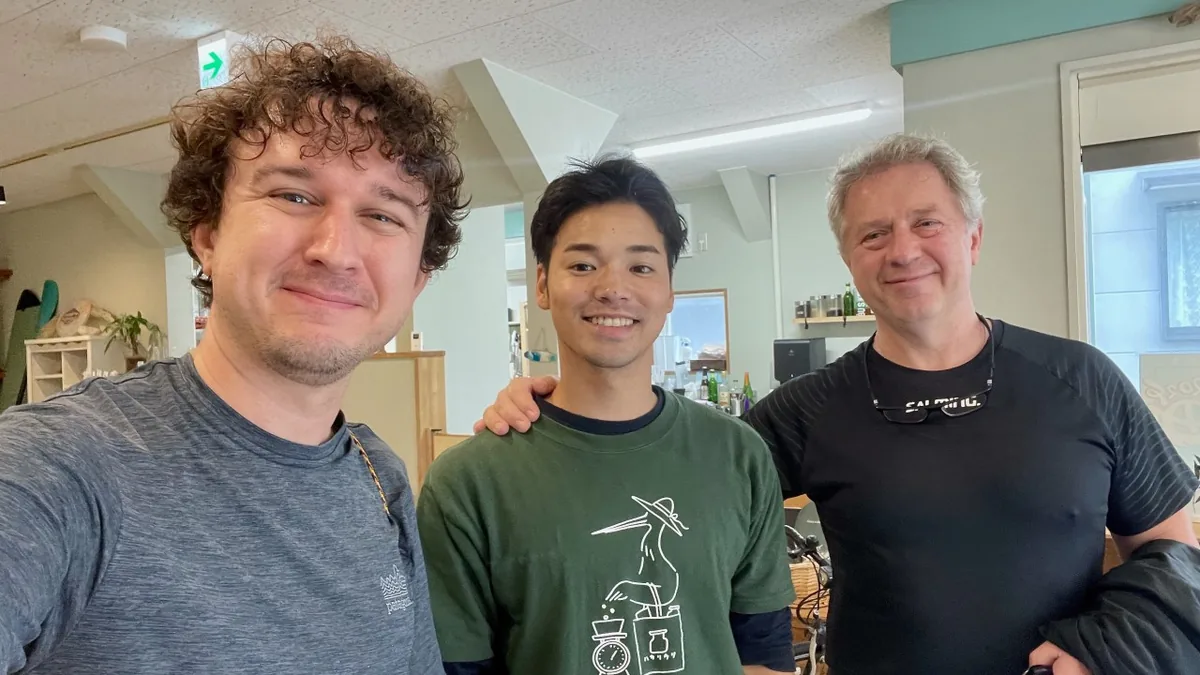
Seeing the countryside with fresh eyes
I first met Tatsuki in a café in Takeno. His journey to France and back had given him a new appreciation for the resources, knowledge and traditions of rural Japan.
After learning directly from farmers, he explored processing overlooked produce into higher-value products. His café became a platform for further initiatives and exchange. His story made a practical point: supporting a community can begin with understanding what it already has, then finding new ways to connect that value with people.
Read the full interview on LinkedIn ↗
Carrying Kyoto craftsmanship forward
Ousuke returned to his family’s Kyoto dyeing business, SHOBIEN, after realizing that he needed to understand the production process before trying to reinvent it. Working alongside artisans gave his ambitions a firmer foundation.
A customer’s question about wallpaper opened a collaboration with another Kyoto maker. The opportunity grew from listening and deep knowledge of the craft. Our conversation explored how a traditional business can find new markets while preserving the human touch and philosophy that make it valuable.
Read the full interview on LinkedIn ↗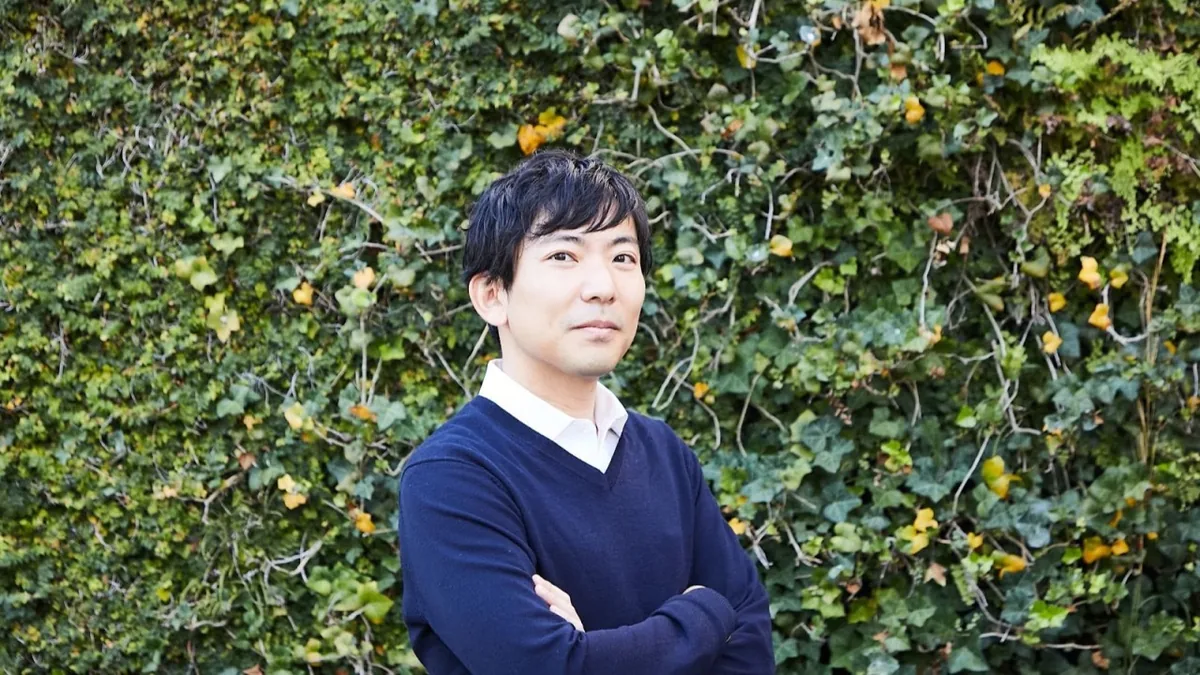
Adapting technology to the real problem
Yosuke’s journey took him from consulting into drones and public-health work in Africa. When delivery projects revealed shortages of medical supplies, his team asked how their technology could help address the needs people identified on the ground.
That led toward identifying mosquito breeding sites, combining drone technology, hydrology and local knowledge. Our conversation returned to the value of complementary teams and global experience: understanding the environment, adapting the solution, and bringing different kinds of expertise together.
Read the full interview on LinkedIn ↗Over Christmas, I went through more than fifteen years of digital notes. Most were observations, questions and reflections, written across different cities and stages of life. The circumstances had changed, but the same concerns kept returning: who am I, and who do I want to be?
For me, identity is what remains when no one is watching. Integrity connects that inner life to outward action. I cannot control the world, but I can choose honesty in how I perceive it, gratitude in how I think about it, and generosity in how I act.
Honesty means resisting the temptation to believe something because I want it to be true. It requires feedback, patience and the courage to change my mind. Gratitude means appreciating the people and freedom already present in my life, while giving less attention to comparison and things beyond my control. It is an active discipline: accepting reality and acting where action is possible.
Generosity begins with making use of the time I have. It extends through care, effort and responsibility for others. Helping someone move forward can make the work more meaningful for both of us.
These principles are a practice, maintained through ordinary choices. Meaning grows through sustained attention—to work, relationships and the patterns that make us ourselves. My invitation is to look for your own patterns, then spend more time living what you have learned.
Reflecting on my work between Japan and Europe, I noticed two kinds of ambition pulling in different directions. One asked whether launching a venture capital fund would prove what I was capable of. The other asked whether it would create a daily working life I actually wanted.
The distinction matters. We can accumulate titles, money and recognition without feeling successful. When ambition is organized around approval, the next achievement simply creates another comparison. It becomes difficult to know whether we want the work or the status attached to it.
What motivates me in connecting Japan and Europe is the everyday experience of seeing people discover unexpected opportunities together. A fund could help that happen, but it is one possible means. The work itself is what gives the ambition substance.
I think of this as process-driven ambition: taking the effort seriously, finding satisfaction in doing it well, and choosing a process worth returning to. A gardener tending a plot with care can express as much ambition as someone pursuing a conventional career milestone.
We live in the present, while much of our attention is spent revisiting the past or rehearsing the future. A more sustainable ambition would help us make better use of the life we are actually living. That requires confidence in our own choices—and a willingness to ask whether the path we are pursuing deserves the days we are giving it.
Culture begins with lived experience: hands learning a craft, people sharing a meal, a festival remembered through sound, movement and place. Only later do those experiences become photographs, recordings or data. AI enters this process at many points, including before we create anything: it helps shape what we encounter, remember and consider normal.
Technology has always helped us carry memory beyond ourselves. Books preserve words, recipes preserve practices, and recordings preserve performances. AI adds something different. It can select, recommend, reorganize and generate from that memory. It can make forgotten material accessible and connect people across languages, while also making some styles more visible than others.
When imitation becomes easy, context becomes more important. A song means different things at a funeral and in an advertisement. Cultural value depends on people, histories and relationships, as well as on the object itself. A convincing reproduction cannot settle the question of what something means or why it matters.
I find it useful to distinguish between a carrier and a bearer of culture. AI can carry cultural forms: store, translate, reproduce and distribute them. People bear culture through belonging, memory, disagreement, care and responsibility. We inherit it, change it and live with the consequences.
AI has influence, but that does not automatically give it authority to decide what should be valued or preserved. Those decisions need to remain open to human discussion. My question is whether AI can help us become more whole—creating room for care, creativity and community—and whether culture can shape the technology that increasingly shapes culture.
Honesty matters to me because decisions depend on the information we allow into them. When fear, self-interest or wishful thinking distort that information, the effects extend into relationships, organizations and the way we understand ourselves.
I see truthfulness as a contribution to clarity. In the small spaces where I work with others, a more accurate view of reality can help us make decisions that fit the situation, rather than forcing it to match a story we prefer.
This does not mean being harsh or revealing everything. Empathy, timing and judgment matter. Honesty can be uncomfortable and can carry risks, especially in one-off interactions. Over time, consistency helps build trust.
My aspiration is to be more honest, earlier, with myself and others—and to spend less energy resisting outcomes when I have done my best to see and explain the situation clearly. It is a practice I want to implement, rather than another idea to collect.
I used to wonder whether a larger meaning would eventually bring order to life. Years of notes returned to the same question, even as my surroundings changed. A simple analogy helped: imagine a long-distance flight with the same departure and arrival airport.
The destination would not explain the journey. Once on board, the useful question would be how to make the most of the time: enjoy a conversation, learn something, rest, or find pleasure in what is available. That image made attention to the present feel rational to me.
It also changed how I thought about work. Years spent in a process I dislike need a good reason. The right choice depends on the person and the moment; there is no universal schedule that makes every life worthwhile.
I still feel the pull of conventional ambition and the desire to leave evidence of achievement. But I am increasingly interested in choosing daily processes that have meaning in themselves, and in learning from people who value that kind of life.
Bring a venture, an investment question or a collaboration you want to develop. We can define a focused first engagement around the decision or next step that matters to you.
Tell me about your organization, the opportunity or challenge, and what you would like to move forward. We can agree on a suitable first step and scope. Early-stage ideas are welcome.
tm@felage.com Connect with me on LinkedIn ↗What relevant work have you done?
Start with relevant work, research or first-hand encounters with the problem. Choose a few concrete examples that explain why this team understands the field. The aim is to establish the foundation for your expertise, rather than list every credential.
Each claim should be supported by the team’s actual experience and evidence.STEP 02 / 07What capability has that given your team?
Explain what that experience has taught you to do or understand particularly well. This might be a technical capability, insight into users or knowledge of an industry. Make the connection clear: your experience has given you the expertise to recognize a meaningful challenge.
Each claim should be supported by the team’s actual experience and evidence.STEP 03 / 07What important problem do you understand?
Describe who faces the problem, why it matters and how it is handled today. Use observations or evidence to explain what remains unresolved. The challenge should emerge naturally from your expertise and give the audience a reason to care about your solution.
Each claim should be supported by the team’s actual experience and evidence.STEP 04 / 07How does your solution address it?
Show how your product or service addresses the challenge. Focus on the value it creates for the user and explain what makes your approach different. Connect the solution to the team’s expertise, and distinguish what already works from what still needs development.
Each claim should be supported by the team’s actual experience and evidence.STEP 05 / 07How will the business earn money?
Explain who pays, what they pay for and how you reach them. Clarify the relationship between the user, customer and buyer if they differ. Show how solving the problem can become a repeatable business, and identify the assumptions you still need to test.
Each claim should be supported by the team’s actual experience and evidence.STEP 06 / 07What have you achieved, and what comes next?
Separate what you have demonstrated from what you plan to achieve. Share relevant progress—such as research results, a prototype, customer feedback or sales—and the main uncertainty that remains. Then name the next concrete milestone, so the funding request has a clear purpose.
Each claim should be supported by the team’s actual experience and evidence.STEP 07 / 07What milestone would this funding enable?
Connect the investment request to that next milestone. Explain how much capital is needed, what it will be used for and what progress it should enable. Help investors understand the opportunity and remaining risks, with expectations grounded in the evidence presented so far.
Each claim should be supported by the team’s actual experience and evidence.